
By Brielle Meyer: A brief analysis of the 1960’s underground press and the effects social media have today on how counter cultures will choose to spread their messages. Source of all information is John McMillian’s book “Smoking Typewriter’s.” If you’re interested in learning more about the underground press of the 1960’s, McMillian is a great read.
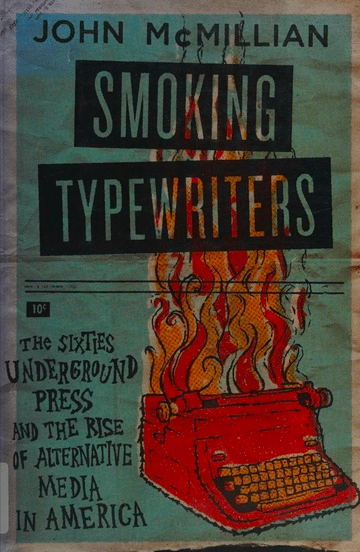
When the underground press emerged in the 1960’s it was largely a way for college students to have a platform, a place to voice their opinions and concerns. These students, mostly members of the group Students for a Democratic Society (SDS), saw society with their young fresh perspectives and dreamed of change – not unlike most college students today. There’s something to be said for being in your early 20’s, being on the cusp of entering your career and the real adult world, and the passion for making a difference that comes with that. So why, 60 years later, has there not been any kind of strong revival of the underground press? Today, when right wing extremists are storming the capital, undocumented immigrants are being moved around like political pawns, and college students are being shot and killed on campuses; why is there not some big push for college students to speak out in the form of an underground press? Because the emergence of the internet created the ultimate space for anyone to vent.

“We are the people of this generation, bred in at least modest comfort, housed now in universities, looking uncomfortably at the world we inherit.” The words from the SDS’s manifesto, The Port Huron Statement, feel like something you’d hear a college student say even today. These students in the 1960’s were living through the Cold War era, they wanted peace and a better world. While the overall culture of the day didn’t care to discuss these issues or do anything about them, the counterculture of college students did. This is a common theme, college students being their own counterculture with their own shared ideals. When countercultures exist, they need to find a way to feel connected, so they know they’re not alone. Norman Mailer, a writer for The Village Voice wrote during the time of the underground press that he wanted to “reach an audience in which no newspaper had yet been interested.” The underground press allowed for this connectivity to exist in the 1960’s for college students who had previously felt unheard. Today, when issues arise that college students feel passionate about they typically will take to social media or the internet to vent their frustrations.
School shootings are a prime example of college students taking to social media to vent and try to work out an issue. Us students who are in college right now grew up doing active shooter drills from the time we were in elementary school. Our entire lives it has not been a question of if, but when. We are angry, and tired, every time something like this happens. But what are we doing about it? I’ve often thought of the college activism of the 60’s and romanticized it and wished that we could have the same kind of effort today. The more I thought though, I realized it’s not a lack of effort, it’s this shift to social media. The activism we see now is more individual than collective. We post and share to our own social feeds our thoughts, or others’ thoughts that we agree with. Anytime a school shooting takes place we see this. While the press and media does report on these incidents what really seems to gain traction is the discourse on social media. Take the recent shooting at Michigan State University for example, students from college campuses across the country have been making TikToks about the incident and are going viral. Meanwhile, the mainstream media is actually catching a lot of flak for how they handled the coverage.
The main difference between the underground press of the 1960’s and the college students today who are posting on social media is the audience listening. For the writers of the underground press in the 1960’s, their audience was much more tangible. They had groups like the SDS where they knew they were not alone, they had their college campus communities where they could circulate their papers and see them on newsstands, or in the hands of their peers. Today, a college student with a message to share is, in a sense, shouting into a void if they choose social media as their means of doing so. The internet is a big place, and people sharing opinions are not difficult to come by. When a college student chooses this as their means, they’re another voice in the crowd. They must pray to the mystical being known as the algorithm to spread their message to the right feeds, so it might get more shares, to go viral and maybe have a chance at making a difference. This becomes problematic, algorithms are not the most reliable and have been known to fail (like when TikTok’s algorithm was accused of being racist.) There’s also simply the issue of the message being sent to the wrong people. If a college student makes a post about a college issue, but the post is only seen by middle-aged people, it may not do well, and the message falls on deaf ears.

The underground press, to me, was an idealized time. Despite its faults, like spreading misinformation about the psychedelic properties of bananas, it did a lot of good for students in the 1960’s and brought them a sense of community and change. I worry that social media, in its current state, will never be able to have that same kind of impact. However, I do believe that no matter what, college students will always find some form of alternative media to take their frustrations to. This comes from them being “the new generation.” Like each generation before them, whatever generation is currently stepping into society will bring a fresh perspective. And like each generation before them, their voices will be ignored by the people who have grown comfortable in the status quo they created when they were coming up. Time and time again, this counterculture of college students will find a space where they can express their feelings and find their community.



 Brielle Meyer
Leave a comment