
By Brielle Meyer
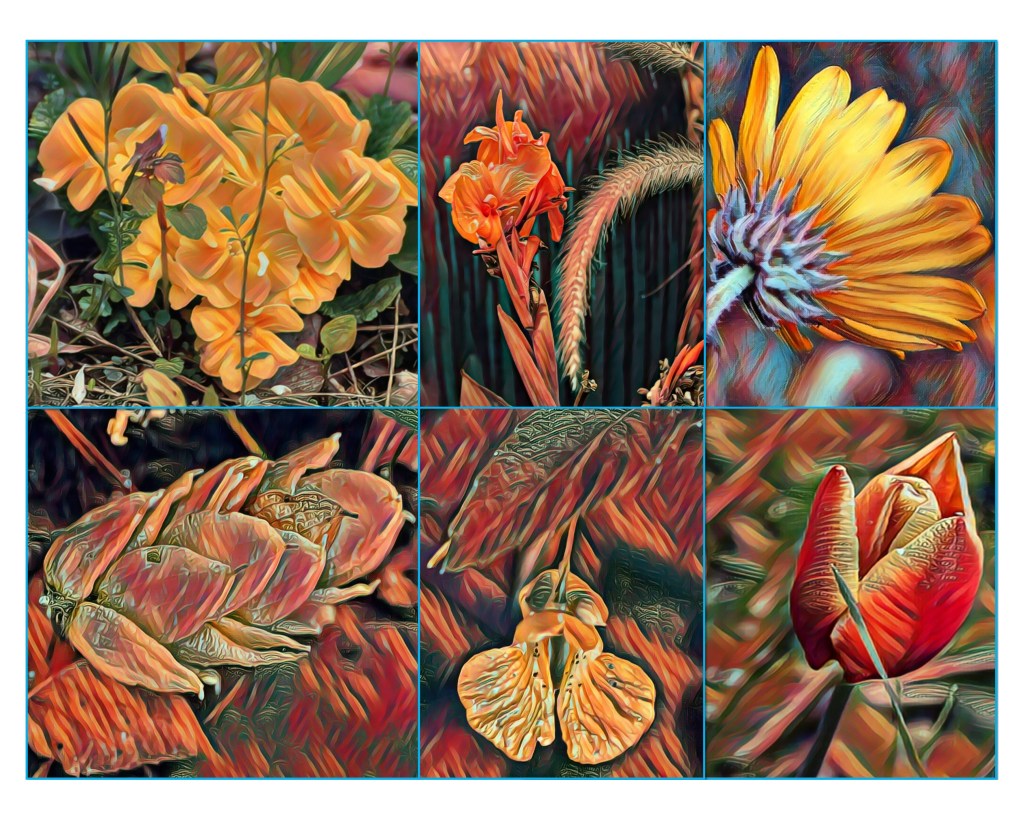
As AI-generated art becomes more common-place it’s also made its appearance at Grand Rapids Art Prize.
What defines art? This is a question that has existed likely as long as art has. From Duchamp’s “Fountain” to Van Gogh’s “Starry Night,” art has always taken many forms, and has always been up for debate and discourse.
Grand Valley State University Professor Andrew Topper entered this year’s Grand Rapids Art Prize with an exhibit that also sparks debate among the art community. Topper’s exhibit titled “Nature Through AI” was on display throughout the art competition at the Embassy Suites hotel on Monroe Avenue.
Topper’s exhibit combines many of the things he enjoys: photography, technology and nature. He explained that in his free time he loves going on hikes which is where he takes most of his photos. Topper has been doing photography for 15 years as a hobby and has worked in technology most of his life. He has a bachelor’s degree in computer science and worked for fifteen years as a software engineer. Topper went back for his Ph.D. and now teaches courses in educational technology.
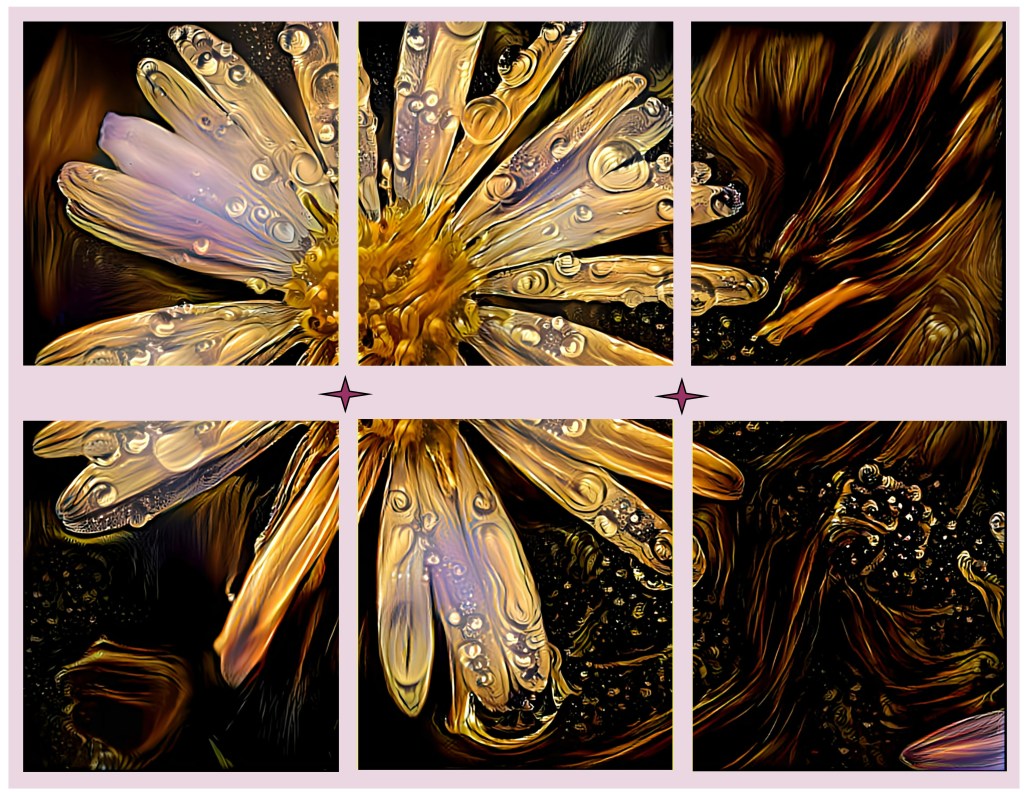
Topper said he’s always kept track of the trends in digital media and one day came across a paper which was about how artificial intelligence was being used to transfer photos into images resembling paintings in different styles of art.
“I got really excited because I thought, this is AI, this is new, it’s different,” said Topper.
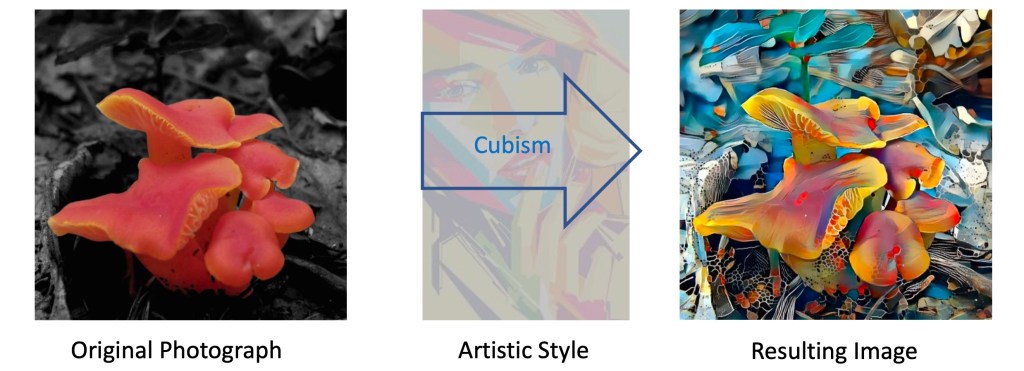
Topper said the method is called neural style transfer. He explained the program uses neural networks and will look at images of styles of art such as cubism, pop-art or fauvism and from that will determine the elements which are necessary for that style. Topper explained that all he needs to do is input his photograph and the program then works its magic, “as the artist of course I have the ability to change saturation or other aspects of the image but the reality is that the software really does it for you.”
That right there strikes at exactly why many people would claim that Topper’s exhibit is not art, “the software really does it for you.” Or, it could raise another question, is Topper the artist? Or does the credit go to technology? Or, a third option, the person who invented said technology.
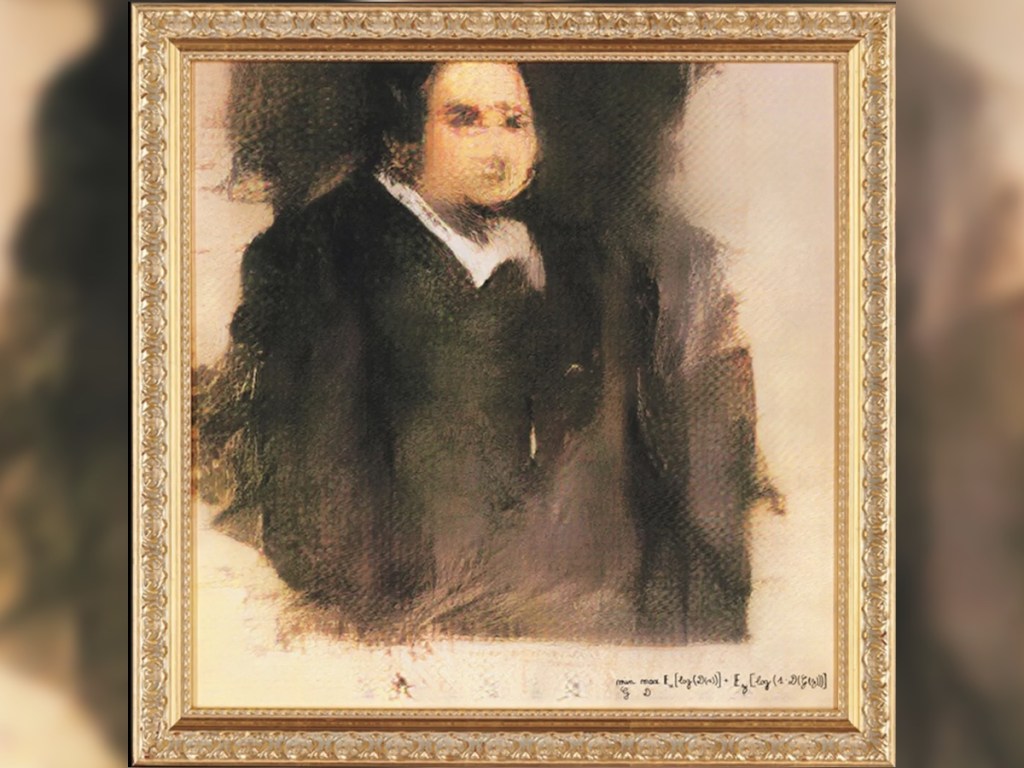
AI-generated art has been raising these questions throughout the art community for a few years now, and just by that fact alone it’s clear that AI-generated art is here to stay. In 2018 AI-generated art made its debut on the world auction stage. Christie’s auction house claimed their title as “the first auction house to offer a work of art created by an algorithm” in October of 2018. “Portrait of Edmond Belamy” sold for $432,500. The artist’s signature at the bottom of the piece is not what one would typically think to find in place of a signature. The piece is signed with the lengthy algebraic formula which allowed the piece to be created. The credit for the piece really goes to a Paris-based art collective called Obvious.
Topper understands the discourse surrounding this new medium that he’s chosen to explore, and welcomed the debate, joking that even his wife can be critical of whether or not what he’s creating is truly art.
“There’s still a lot of debate about the role of artificial intelligence in any creative endeavor,” said Topper. “Some people don’t believe that taking a photograph is art, I happen to believe that is art. So, if I start with art, then the end product if it’s been massaged or changed in some way should also be considered art.”
Topper makes a good point there. If something is art, then changing it or enhancing it in any way shouldn’t take away its artistic value. Especially in this case since what he’s doing is truly adding to the work and making it more artistic. However, the world of AI-generated art is not always so simple. “Portrait of Edmond Belamy” by Obvious and Topper’s “Nature Through AI” are all pieces which required a respectable level of work on the artists part, like coming up with an algebraic formula to generate the desired result or taking the perfect photograph to run through the software. Therefore, it’s clear where the artist gets credit and what they get credit for. However, any one of us could sign on to wombo.art/create and punch in a few words to end up with our own unique piece of AI-generated art. Is that a respectable level of work? Here’s a piece I created on wombo.art in a quick one minute break I took from writing this story.
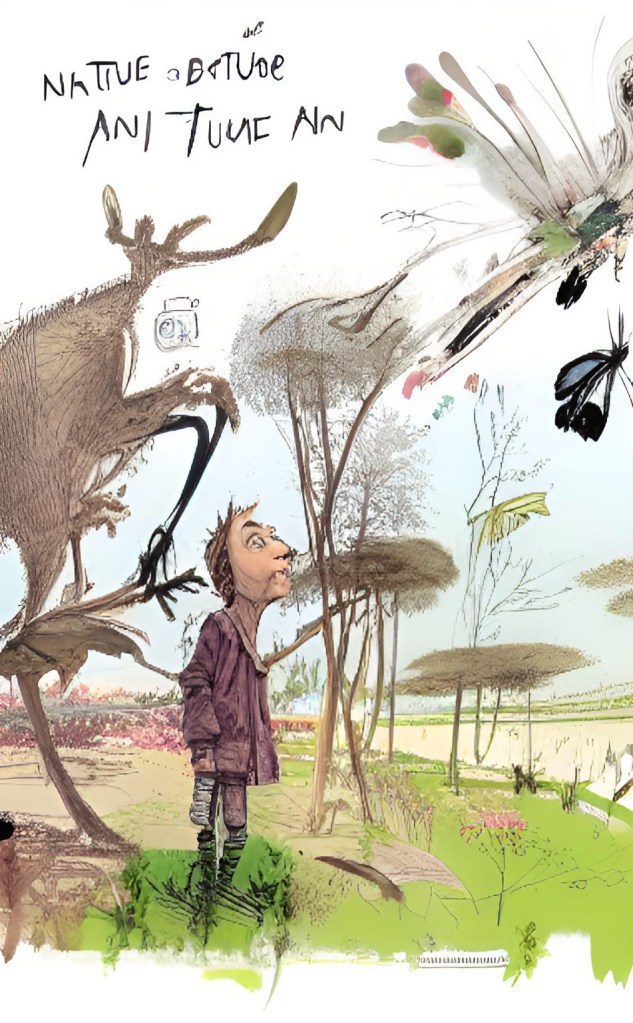
In this case the lines get even blurrier. Who is the artist? The person who wrote the program, the person who came up with the few words that generated this unique piece or the program itself? Technically, I am the owner of this piece. But can I be considered an artist for creating it? Is this art?
Topper seemed to have a solution to the discourse, while he clearly defines his works as art he draws the line at calling it fine art. He defined fine art as “painting, sculpture, the things that people spend years as apprentices learning,” Topper went on to talk about a piece he saw at Art Prize which took two years to create. He explained that his art takes him a matter of minutes and so he doesn’t see them as being on the same level.
“A good metaphor for me is music,” Topper explained how before technology came along in order to create music people would need to use instruments to create every sound, but now with a synthesizer people have every sound possible at the push of a button. “Is that music in the same way that an orchestra is music? Or is that just a different way of representing music in a different form?”
Topper’s metaphor also seems to perfectly answer the question of “is it art?” since music created using a synthesizer seems to have been accepted as a new kind of music for a while now. Just like AI-generated art, it’s simply a different way of getting the end product. Topper’s answer seems to be a simple one but the debate will likely go on.
Through all the discourse and debate however, one thing is clear, AI-generated art is here to stay and possibly change the landscape of the art world. As technology advances and finds its way into all aspects of life it’s only logical it will find its way in the art world as well.




 Brielle Meyer
Leave a comment